Industries WE CATER
Let’s innovate your industry We put our technology solutions to work for you.

Industry Expertise
16+
Industries
As an industry-agnostic company catering to diverse business niches, we keep best technology solutions and business understanding at the focus of every project, irrespective of any industry.
At ThemeMakker, we continue to develop the ideas that transform our tomorrow. Our industry knowledge and expertise allow brands to harness the power of technology and develop each brand in a way that showcases its strength. From designing to development, marketing to testing, our strategies have solved varied problems for different industries and allowed businesses to focus on the critical edge while jumping off the line. Let ThemeMakker ignite your potential.


we use Tools &
technologies

Angular

React.js

Vue.js

Next JS

Bootstrap

Tailwind

Svelte

Meteor

PWA

Laravel

PHP

Webflow

WordPress

Magento

Node.js

.Net

Symfony

Codeigniter

Odoo

Hubspot

Flutter

iOS

Android
Reactnative

Figma

Adobe XD
How We Work – 4 Simple Steps to Success
Understanding Your Industry Needs
We start by thoroughly understanding the unique challenges, goals, and trends within your industry.
Tailored Strategy & Planning
Based on our insights, we create a bespoke strategy that caters to your specific industry demands.
Implementation & Integration
Our experienced team will implement the plan seamlessly using our advanced tech stack—be it ReactJS, VueJS, Bootstrap, Laravel, or others.
Ongoing Support & Optimization
Post-launch, we provide continuous support and optimization services.
Explore our
Recent Projects
View All
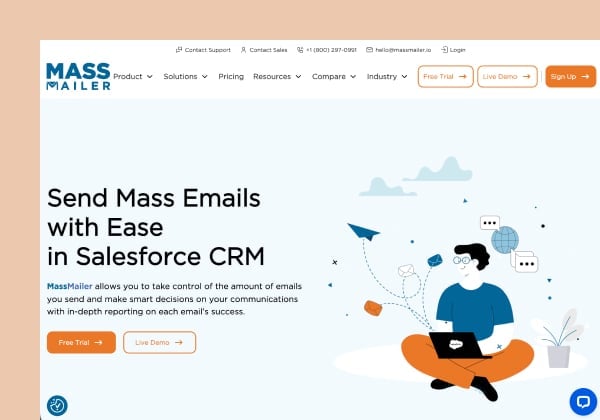
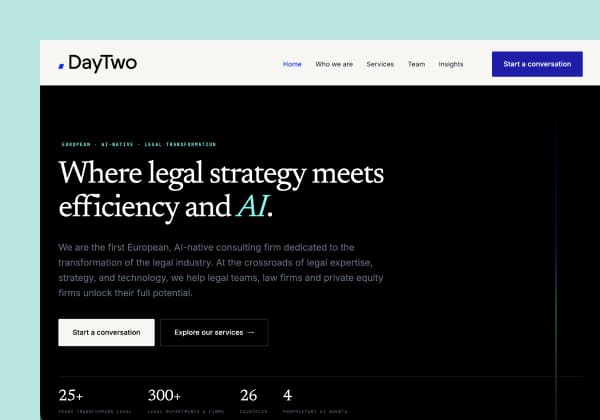
Discover fresh design inspirations from our latest creations for your next project.
Ready to take your website to the next level?

Discuss your business goals with us, and our experts will provide customized solutions to meet your needs.
Average response time of ThemeMakker is 3:48 business hours!
Awwwards, Design Nominees, CSSLight, Best CSS and more





THEMEFOREST
Exclusive Author
Modern Admin Dashboard Templates for Developers & Businesses
Discover professionally designed admin dashboard templates for modern web applications. Our responsive dashboards are built with Bootstrap, React, Vue.js, Angular, Tailwind CSS, Laravel, Next.js, Node.js, ASP.NET, WordPress, WebFlow, and HTML.


Some of FAQs
We can clear all your doubt quickly...
ThemeMakker serves 16 industries across both B2B and B2C business models. Each industry has a dedicated approach rather than a generic template applied across sectors.
- eCommerce, Healthcare, Finance, Logistics, Education, Real Estate, Insurance, Security, Agritech, Media and Entertainment, Travel and Tourism, Fashion, Food and Beverage, Sports, Kitchenware, and Pet.
- If your industry is not listed, contact us. Our capability is defined by our technology stack, not by whether we have a dedicated industry page for your niche.
Every industry engagement starts with a discovery phase where we learn the specific operational challenges, regulatory constraints, and user expectations in your sector before recommending any technical approach.
For example, a logistics platform requires real-time tracking and complex API integration with shipping providers. A healthcare platform requires data encryption, accessibility compliance, and HIPAA-adjacent security standards. A fashion eCommerce store requires visual-first design, fast page loads, and high-conversion product pages. These are not variations of the same template. They are distinct technical and design requirements that demand industry-specific thinking.
Our team of 50+ professionals includes developers and designers who have worked across all 16 sectors. When we assign a team to your project, we match not just on technology stack but on relevant industry exposure.
Yes. Our portfolio at thememakker.com/portfolio includes 100+ projects spanning industries including fintech (Kurdpay), government (NYC Independent Budget Office), healthcare, logistics, and eCommerce.
For specific industry examples, contact us directly with your sector and project type. We will pull the most relevant case studies and team profiles for your review rather than pointing you at a generic portfolio page.
We have delivered 310+ projects globally with 228+ API integrations. If you need verifiable evidence of capability in a specific sector, we can provide that conversation before any contract is signed.
We work with both, and the approach differs meaningfully between them.
Startups entering a new sector typically benefit from a phased engagement: a discovery sprint first to validate the technical approach, followed by an MVP build that proves the core proposition before committing to the full feature set. This keeps early investment focused on what actually needs to be proven.
Established businesses typically come to us with existing systems that need modernisation, integration, or scaling. The starting point is an audit of what exists, what is worth preserving, and what needs to be rebuilt rather than extending.
In both cases we give you our honest assessment of scope and timeline before any work starts.
Our four-step approach to every industry engagement is as follows.
- Step 1: Industry understanding: We research the specific challenges, regulations, and competitive landscape in your sector before the kickoff call. You do not spend the first meeting explaining your industry to us.
- Step 2: Tailored strategy: Based on the discovery, we produce a strategy document covering recommended technology stack, key feature priorities, integration requirements, and risk areas specific to your industry.
- Step 3: Implementation: Development runs in defined sprints using the technology stack that fits your sector. Healthcare projects follow different security protocols than eCommerce projects. Each has its own implementation standards.
- Step 4: Ongoing support: Post-launch maintenance, performance monitoring, and feature iteration are available as a retainer. Industries with regulatory requirements (healthcare, finance, insurance) get additional documentation support as part of this.
Our eCommerce practice covers platform development and customisation on Magento, WooCommerce, and Shopify, alongside custom eCommerce builds for businesses whose requirements go beyond what standard platforms support.
Beyond the storefront, we build the systems that make eCommerce operations run: inventory management with mobile barcoding and forecasting, 60+ payment gateway integrations, subscription and recurring billing systems, personalised recommendation engines, loyalty programme integration, and B2B pricing and catalogue management.
We have delivered 310+ eCommerce solutions including builds for auto parts retailers in Australia and healthcare product sellers in the United States.
Yes. B2B eCommerce has distinct requirements that standard consumer-facing platforms do not handle well out of the box: customer-specific pricing, quote and approval workflows, minimum order quantities, account hierarchy management, and integration with ERP or procurement systems.
We have built B2B eCommerce platforms across manufacturing, wholesale distribution, and healthcare supply sectors. The approach starts from the buyer workflow rather than from a standard template, because B2B purchasing behaviour is fundamentally different from B2C.
If you are moving a B2B sales process online for the first time, we will help you map the workflow before writing a line of code.
We have integrated 60+ payment gateways across our eCommerce projects including Stripe, PayPal, Razorpay, PayU, Braintree, Square, Authorize.Net, and regional gateways for India, the Middle East, and Europe.
Integration work covers both the technical connection and the edge cases: failed payment handling, webhook verification, refund workflows, recurring billing for subscriptions, and currency conversion for multi-region stores.
If you need a gateway we have not worked with before, we will review the API documentation and give you an honest assessment of complexity and timeline before scoping the work.
Our healthcare practice covers patient-facing web applications, healthcare eCommerce platforms for medical products and services, appointment scheduling systems, telehealth interfaces, and healthcare provider portals.
We prioritise three things on every healthcare build: data security with encryption and secure user authentication, accessibility to ensure the platform works for users with varying needs and disabilities, and scalability so the system can integrate new technologies as medical practices and regulations evolve.
Healthcare data requires a higher security standard than most other sectors, and we build with that constraint from the architecture stage rather than adding security as a layer after the product is built.
Our standard practices on healthcare projects include encrypted data storage and transmission, role-based access control so only authorised users see patient or sensitive data, secure authentication including multi-factor options, and audit logging for all data access events.
We implement compliance-aligned practices for projects serving US healthcare clients, and we will discuss the specific regulatory requirements for your region and patient population before scoping begins. We will also tell you honestly if a requirement falls outside our current practice area so you can plan accordingly.
Our finance practice covers banking and financial institution websites, fintech applications, investment platforms, insurance portals, personal finance dashboards, and custom financial tools including calculators, portfolio trackers, and reporting systems.
A notable example from our portfolio is Kurdpay, a fintech product built for an international client. Our finance work also includes 228+ API integrations that include connections to financial data providers, banking APIs, and compliance verification services.
We empower finance sector clients to meet current consumer demands while building systems that can adapt to regulatory changes and product evolution.
Financial applications face a higher threat profile than most web products. Our approach integrates security into the architecture from the start.
Specific practices on financial projects include: advanced encryption for data at rest and in transit, authentication hardening with multi-factor options, session management controls to prevent token hijacking, input sanitisation to block injection attacks, rate limiting on API endpoints to prevent abuse, and dependency auditing to catch known vulnerabilities in third-party libraries before deployment.
We also follow secure deployment practices including environment separation, secrets management, and access logging so there is a complete audit trail of who touched what and when.
Yes. Logistics platforms are a core part of our industry practice. The typical scope for a logistics project includes real-time shipment tracking, route optimisation interfaces, driver and fleet management dashboards, customer-facing delivery status portals, and integration with shipping carrier APIs.
Our experience with 228+ API integrations means we have handled the complexity of connecting to third-party logistics providers, mapping services, barcode scanning systems, and warehouse management platforms.
If you are building a platform that needs to handle high data volumes, real-time updates, and multiple user roles simultaneously, we will assess your architecture requirements during the discovery phase before recommending a technology approach.
Our education practice covers learning management systems, student and teacher portals, online course platforms, institutional websites, assessment and examination tools, and virtual classroom integrations.
Education platforms have specific requirements around concurrent user handling during peak periods such as exam time, accessibility for users with learning differences, mobile responsiveness for students on lower-end devices, and content management tools that non-technical staff can use without developer involvement.
We design education platforms to be manageable by the institution's own team after handover rather than creating dependency on us for routine content and user management tasks.
Yes. Real estate platforms are a distinct product category with specific requirements: property search with geographic filtering, map integration, listing management for agents and agencies, mortgage and affordability calculators, lead capture and CRM integration, and virtual tour or 3D visualisation embedding.
We build real estate platforms for property developers, agencies, and PropTech startups. The technology approach depends on the scale: a single-agency website has different requirements from a multi-listing marketplace serving thousands of properties.
Contact us with your property volume, user types (buyers, renters, agents, developers), and geographic scope and we will outline the right technical approach.
Yes. Insurance platforms require a combination of complex data logic, user-friendly interfaces for non-technical policyholders, and strict data security. Our insurance practice covers customer-facing policy portals, quote and application workflows, claims management systems, agent dashboards, and integration with underwriting and payment systems.
We have delivered insurance-adjacent work through our fintech and healthcare practices as well, including identity verification integrations, document upload and verification workflows, and automated notification systems for policy events.
Security sector projects typically involve control room dashboards, monitoring interfaces, access control management systems, incident reporting tools, and client-facing portals for security service companies.
The technical priorities in security platforms are reliability, real-time data handling, and role-based access control. A security platform that goes down or shows incorrect data at the wrong moment has real operational consequences. We build with that level of reliability as a baseline requirement rather than a premium feature.
Yes. Agritech is an emerging sector where the technical requirements often combine IoT data handling, field management tools, supply chain tracking, and marketplace functionality for agricultural inputs and produce.
Our agritech practice covers farm management applications, crop monitoring dashboards, agricultural marketplace platforms, and tools that connect farmers with buyers, logistics providers, and financial services.
If you are building an agritech product, contact us with the specific problem you are solving for the farmer, the buyer, or the supply chain operator. The technical approach follows from the user problem, not the other way around.
Yes. Media and entertainment platforms cover a wide range from editorial content sites and magazine-style publications to video streaming portals, podcast platforms, and entertainment booking systems.
Technical priorities for media platforms include content delivery speed, SEO-ready architecture for content discoverability, paywall and subscription management, user personalisation, and comment and community moderation tools.
For streaming-heavy platforms, we integrate with proven CDN and media delivery infrastructure rather than building custom delivery systems from scratch. This gives you production-grade performance without the maintenance overhead of proprietary infrastructure.
Travel platforms are operationally complex because they connect multiple third-party data sources (flights, hotels, activities, transfers) with a booking and payment workflow that needs to handle real-time availability and pricing.
Our travel practice covers booking engines and reservation management systems, travel agency portals, destination and itinerary builders, and travel eCommerce stores for travel accessories and equipment.
If you are building a travel aggregator, booking platform, or tour operator system, the scoping conversation needs to cover your data sources, the booking workflow for the end user, and how cancellations, modifications, and refunds are handled. We will help you map this before writing a specification.
Yes. Fashion is a visually demanding sector where the website design carries as much weight as the eCommerce functionality. A fashion platform that loads slowly, displays product images poorly, or has a clunky checkout flow loses conversions regardless of how strong the product is.
Our fashion practice covers brand websites with editorial storytelling, product catalogue and collection management, visual merchandising tools for the marketing team, size guide and fit advisory features, and the full eCommerce stack including inventory, checkout, and returns management.
We also build wholesale and B2B fashion platforms for brands that sell to retailers as well as directly to consumers.
Yes. Food and beverage platforms range from single restaurant ordering systems to multi-vendor food delivery marketplaces. The technical requirements differ significantly between them.
A single restaurant system needs menu management, table or delivery order management, payment integration, and a kitchen display or notification system. A multi-vendor marketplace adds vendor onboarding, commission tracking, driver or delivery partner management, and real-time order status across multiple parties.
We will ask you to define the scope clearly before we price the work because the gap between a single restaurant app and a food delivery marketplace is substantial in complexity and cost.
Yes. Sports platforms cover a range from club and league management tools, team and athlete portals, sports eCommerce stores for equipment and merchandise, live score and statistics dashboards, fantasy sports applications, and ticketing and event management systems.
Sports applications often have spiky traffic patterns around live events and match days. We design for peak load from the start, not after the first traffic spike causes a performance incident.
The starting point is a no-commitment conversation. Contact us at info@thememakker.com or via the form at thememakker.com/contact-us with a brief description of your industry, the problem you are trying to solve, and roughly where you are in the planning process.
Within one business day we will respond with either a specific set of questions to scope the project properly or, if your brief is detailed enough, an initial outline of the recommended approach and what a discovery engagement would look like.
We do not require a detailed specification to start the conversation. Many of our best projects began with a client who had a clear problem but no technical brief.
Yes. Post-launch support is available as a monthly retainer covering bug fixes, security patches, platform updates, performance monitoring, and minor feature additions.
For regulated industries (healthcare, finance, insurance) we provide additional support covering documentation updates when compliance requirements change and security reviews when new vulnerabilities are disclosed that affect your technology stack.
Industries with seasonal traffic peaks (travel, fashion, food delivery, sports) benefit from our pre-peak performance reviews where we audit your infrastructure and code before your busiest period rather than responding to incidents after they happen.
Maintenance terms, response times, and included hours are agreed in writing before the retainer starts.