Shopify vs. Custom Website: How to Pick the Best Platform
Category:: Ecommerce


Launching an ecommerce store requires selecting the right digital platform. Business owners often feel torn between choosing a hosted platform like Shopify and building a custom website from scratch.
Both paths can lead to online sales success, but they support very different operational models, budgets, and growth strategies. Choosing the wrong infrastructure can restrict your business or drain your financial resources prematurely.
This guide provides an objective breakdown of both solutions to help you decide which platform aligns with your long-term business goals.
Understanding the Foundations
Before comparing specific features, it is vital to understand the foundational philosophy behind each solution.
What is Shopify?
Shopify is a complete cloud-based ecommerce platform that lets you set up an online store, manage inventory, accept payments, and process orders out of the box. It runs on a subscription model, with Shopify managing hosting, security, and core maintenance.
What is a Custom Website?
A custom ecommerce website is built entirely from the ground up using specialized web architecture. Developers write original code tailored specifically to your exact operations. You hold complete ownership of the database, design, hosting server, and code repository.
Evaluating Key Decision Factors
Choosing between these options requires evaluating several business dimensions, including budget, customization needs, security, and scalability.
Cost and Financial Investment
1. Initial Costs
Shopify features a low barrier to entry. You pay a predictable monthly fee along with minor transaction costs.
Templates and basic setups let startups launch with minimal upfront cost. On the other hand, custom development requires a significant upfront investment. You must pay developers, designers, and system architects before making your first sale.
2. Long-Term Expenses
While Shopify starts cheap, costs compound as your business scales; transaction fees, premium third-party app subscriptions, and specialized theme tweaks add up over time.
A custom site requires high upfront capital, but ongoing costs are generally limited to hosting, maintenance, and periodic updates. Over several years, high-volume enterprises may find custom builds more financially efficient.
Flexibility and Customization
1. Theme Limitations vs Complete Freedom
Shopify provides prebuilt themes that allow quick adjustments. However, you are limited by the platform’s underlying framework. If your store needs complex product builders or unique workflows, you may need a specialized Shopify custom website design or professional help tweaking Liquid code.
A custom site provides absolute creative and functional freedom. You can design every button, checkout step, database relationship, and visual detail around your specific business model without platform constraints.
2. Time to Market and Setup Speed
- Speed is often critical for modern businesses testing new markets.
- Shopify: Can launch within days or weeks. Prebuilt templates and integrated payment processors streamline deployment.
- Custom Website: Typically takes several months. Writing bespoke code, running quality tests, and setting up servers requires meticulous work.
Technical Capabilities and Maintenance
Maintaining a smooth digital store involves ongoing technical support, search engine visibility, and robust data protection.
Search engine optimization is critical for acquiring organic traffic.
1. Search Architecture on Shopify
Shopify handles basic SEO well. It automatically generates sitemaps, includes SSL certificates, and offers clean URL structures. However, you cannot alter specific server headers or URL hierarchies, which can restrict complex enterprise SEO strategies.
2. Advanced Search Customization
A custom-built store gives you complete control over your technical SEO. You can optimize server speeds, structure databases for ultra-fast indexation, and create tailored metadata schemas without any software limitations.
Ongoing Maintenance and Security
1. Hosted Reliability
Shopify automatically handles security, software patches, hosting maintenance, and PCI compliance. Small teams can focus purely on marketing and inventory without worrying about site crashes during peak traffic spikes.
2. Dedicated Technical Management
With a custom website, your team or technical partner is fully responsible for security updates, hosting infrastructure, data backups, and PCI compliance. This gives you maximum control but introduces operational risk if you neglect software upgrades.
Shopify Vs Custom Website: Brief Comparison
| Feature | Shopify | Custom Website |
|---|---|---|
| Initial Cost Expense | Low predictable subscription | High upfront development expense |
| Setup Time | Fast (days to weeks) | Slow (months) |
| Operational Maintenance | Handled automatically | Managed manually by your team |
| Customization Depth | Restricted by framework limits | Unlimited possibilities |
| SEO Control | Good basic structure | Complete technical freedom |
| Security & Compliance | Built-in PCI compliance | Manually configured and sustained |
| Scalability Path | Subscription upgrades | Server architecture expansion |
When to Choose Shopify
Shopify is often the ideal choice for business models that value speed, simplicity, and low initial overhead.
1. Strengths for Growing Brands
If your main goal is to sell standard retail products without complex manufacturing rules, Shopify provides everything you need. You can expand functionality by hiring a Shopify development company to construct specialized apps or bespoke user interfaces that align with platform guidelines.
2. Ideal Scenarios for Shopify
- Startups testing product-market fit quickly.
- Direct-to-consumer brands selling physical merchandise.
- Businesses with small technical teams and limited initial capital.
- Merchants who prefer automated security and managed hosting.
When to Choose a Custom Website
A custom ecommerce store becomes essential when standard SaaS software cannot accommodate your business operations.
Unlocking Unique Business Models
When your sales process involves intricate business-to-business wholesale portals, real-time dynamic pricing algorithms, or complex custom product configurators, standard software platforms become restrictive.
Ideal Scenarios for Custom Builds
- Enterprises requiring proprietary data integrations with legacy hardware.
- High-volume merchants looking to bypass ongoing platform transaction fees.
- Niche businesses with unique customer journeys.
- Companies that must own their complete intellectual property and software code.
Blending Both Approaches
Many businesses realize they don’t have to choose strictly between a basic template and a fully custom site. Many growing brands use specialized Shopify custom development to build bespoke features on top of Shopify’s reliable backend infrastructure.
By utilizing custom software connections or specialized headless architectures, you can combine the reliability of hosted checkout systems with the visual uniqueness of a custom frontend.
Final Verdict
Selecting between Shopify and a custom website depends on your budget, timeline, technical skills, and operational complexity.
Choose Shopify if you want a reliable, easy-to-manage store that allows you to start selling immediately with minimal upfront technical risk. Choose a custom website if your business model demands total creative control, complex database integrations, complete software ownership, and unique features that standard tools cannot support.
Evaluating your current resources against your long-term strategy will ensure you select the platform that fuels your business growth.
Ready to build a powerful online store that scales your business? Partner with Thememakker for expert Shopify Development Services, custom designs, and seamless setup. Contact our team today to transform your e-commerce vision into a high-converting digital reality.

Frequently Asked Questions
-
Q:: Is Shopify better than a custom-built website for an online store?
A:: Shopify works better for fast setups and simple retail operations. A custom website excels for complex workflows, unique functionality, and enterprise operations that require full ownership of code and backend databases.
-
Q:: Is Shopify cheaper than building a custom ecommerce website?
A:: Shopify is much cheaper initially due to low subscription costs. However, custom websites can become cheaper over time for enterprise brands avoiding high payment processing fees and monthly software add-on subscriptions.
-
Q:: Which is more customizable: Shopify or a custom website?
A:: A custom website offers complete customization freedom with no structural limitations. Shopify allows extensive design adjustments, but developers remain constrained by the underlying platform architecture, Liquid templates, and core checkout rules.
-
Q:: Which is better for SEO: Shopify or a custom ecommerce website?
A:: Custom websites provide superior SEO control because developers can modify server settings, page speed parameters, and URL structures. Shopify offers good basic SEO features that work perfectly for standard retail stores.
-
Q:: Which option is better for a small business or startup?
A:: Shopify is ideal for small businesses because it eliminates heavy technical requirements. Startups can launch quickly with minimal capital, built-in security, simple inventory tools, and low monthly platform maintenance costs.
Recommended Posts
97.9%
Projects Delivered On-Time

5,000+
Creatives & Agencies Trust Us.

Development Service?
We can provide at affordable price.


Awwwards, Design Nominees, CSSLight, Best CSS and more





THEMEFOREST
Exclusive Author
Modern Admin Dashboard Templates for Developers & Businesses
Discover professionally designed admin dashboard templates for modern web applications. Our responsive dashboards are built with Bootstrap, React, Vue.js, Angular, Tailwind CSS, Laravel, Next.js, Node.js, ASP.NET, WordPress, WebFlow, and HTML.


Feature themes
Boost your customer interactions with Templates that spark growth.
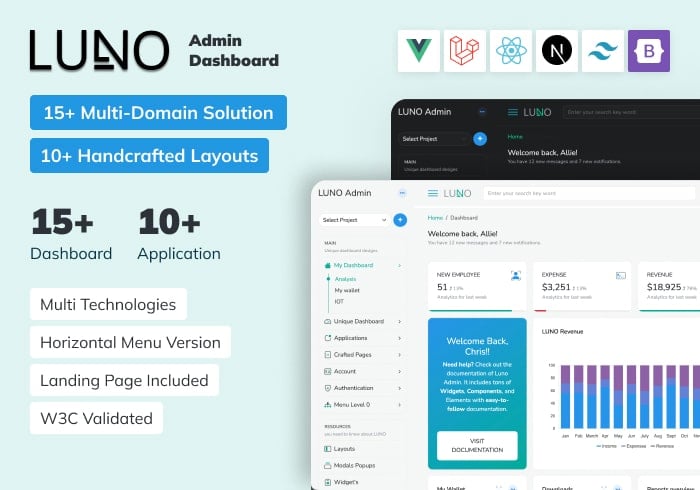
Luno – React, Vue, Laravel, Tailwind, Nextjs Admin Dashboard Template
ReacJs, Vue, Laravel, Bootstrap, Tailwind, NextJs
$19.00 0 Sales

ALUI | Bootstrap 5, ReactJS, Angular, VueJS, Laravel Admin Template
Reac, Angular, Vue, Laravel, Bootstrap
$19.00 0 Sales